
At Lesh Lifestyle in Sarasota, this is often the moment people reach out to Dr. Sarah Secor-Jones, DO, FACEP. They have tried to do everything “right.” They are losing inches but not weight, or their energy is better but the scale feels stuck. It makes them question whether any of it is working.
This is where looking beyond the scale matters. Because fat loss, muscle gain, hormones, stress, sleep and even hydration all play a part in what your body is doing, even when the number is not changing the way you expect.
Why can you be losing inches but not weight?
You can be losing inches but not weight because body composition is changing even when total body mass stays the same. As you lose fat and gain or preserve muscle, your shape shifts, your clothes fit differently, and your health markers improve, even if the scale barely moves.
Fat tissue takes up more space than muscle. A pound of muscle and a pound of fat weigh the same, but muscle is denser and more compact. That means you can “shrink” in size without a big change on the scale if you are building or keeping muscle while you lose fat.
Other factors also blur what the scale shows:
- Fluid shifts from hormones, salt intake or your menstrual cycle
- Inflammation after a hard workout
- Glycogen changes if you adjust carbs or training
For many women, there is an extra layer of frustration because hormone changes in perimenopause and menopause alter where fat is stored and how easy it is to lose. Dr. Sarah reads the whole picture, which helps you understand what is truly changing.
What is body recomposition, in plain language?
Body recomposition means changing the balance of fat and muscle in your body, rather than chasing a lower scale number alone. You are aiming for less fat, more muscle, better strength and better health, even if your weight ends up the same.
In real life, it looks like this:
- Your waist and hips measure smaller
- Your arms and legs look more defined
- You can carry groceries, climb stairs and hold a plank more easily
- Your labs and blood pressure move in the right direction
From a clinical view, this shift is more protective for long-term health than simply being lighter. More lean mass supports your metabolism, blood sugar control, bone health and balance. Less visceral fat around the organs lowers your risk of many chronic conditions.
When Dr. Sarah builds a medical weight loss or body optimization plan, the focus is almost always body recomposition as the goal. The scale is one data point. It is never the whole story.
How long does body recomposition take?
Body recomposition takes time, most often measured in months. For many people, clear changes in measurements, strength and photos show up with steady, consistent work over a longer stretch.
The exact timeline depends on:
- Your starting point
- How much fat you want to lose
- How much muscle you already have
- Hormone status and age
- How steady you can be with training, nutrition, sleep and stress
If you are asking how long body recomposition takes as a female in perimenopause or menopause, the answer is often that progress is still very possible, but it may move more slowly. Hormone shifts, sleep disruption and insulin changes all play a part.
At Lesh Lifestyle, Dr. Sarah tracks more than the scale to show progress across that longer window. This might include body measurements, progress photos, strength markers and lab changes, so you can see that your work is adding up even when the week-to-week scale number feels noisy.
How long does body recomposition take for women specifically?
For many women, body recomposition takes longer than they expect because they are working with hormone patterns, past dieting history, and often less time for recovery. It helps to think in seasons rather than weeks, with early changes in how clothes fit followed by clearer muscle definition and strength gains as you stay consistent.
Two common patterns Dr. Sarah sees in Sarasota:
- Women in their 30s and early 40s who have dieted on and off for years. Their bodies have adapted to low calories, and they often have less muscle than they think. They need time with enough protein, structured strength work and gradual changes.
- Women in perimenopause and menopause facing weight gain around the middle for the first time. Here, estrogen, progesterone, cortisol and insulin all matter. Body recomposition is still possible, but it works best when hormones, sleep and stress are addressed alongside nutrition and activity.
This is why there is no single answer to how long body recomposition takes for females. When Dr. Sarah builds a plan, she looks at your full hormone picture, your history and your current demands at home and work. The plan then matches your real life, instead of asking you to live like a full-time athlete for a short burst.
What are “non scale victories” and why do they matter?
Non scale victories are all the wins you can see and feel that have nothing to do with the number on the scale. They matter because they show your health and body are changing in meaningful ways, even when weight is slow to follow.
Common non scale victories Dr. Sarah encourages patients to track include:
- Clothes fitting better at the waist or hips
- Needing a smaller belt notch
- Better sleep and fewer night wakings
- More steady energy through the afternoon
- Improved mood and lower anxiety
- Stronger lifts or faster walks
- Fewer cravings or less “hangry” feeling
- Better digestion and less bloating
These changes are early signs that hormones, blood sugar and inflammation are shifting in the right direction. When you only watch the scale, you miss this proof that your effort is working.
During a medical weight loss or integrative medicine program at Lesh Lifestyle, non scale victories are part of every check-in with Dr. Sarah. They guide when to adjust food, training, medications or devices, and they often arrive before the number catches up.
How do you actually do a body recomposition?
You do a body recomposition by pairing enough stimulus to build or keep muscle with a plan that steadily reduces excess fat. For most people, this means strength training, adequate protein, smart calorie control, good sleep and stress support, often with medical help when metabolism or hormones are out of balance.
In practical terms, the core pieces look like:
- Strength training several times per week, focusing on big muscle groups
- Daily movement, even on non-gym days
- Protein spread through the day
- A calorie range that is low enough for fat loss but high enough to protect muscle
- Sleep and stress habits that support hormone balance
For some patients, GLP-1 medications within a structured medical weight loss program help control appetite and insulin so that fat loss is possible without extreme restriction. Dr. Sarah always pairs these with strength, nutrition guidance and lab monitoring, so loss of muscle is limited as much as possible.
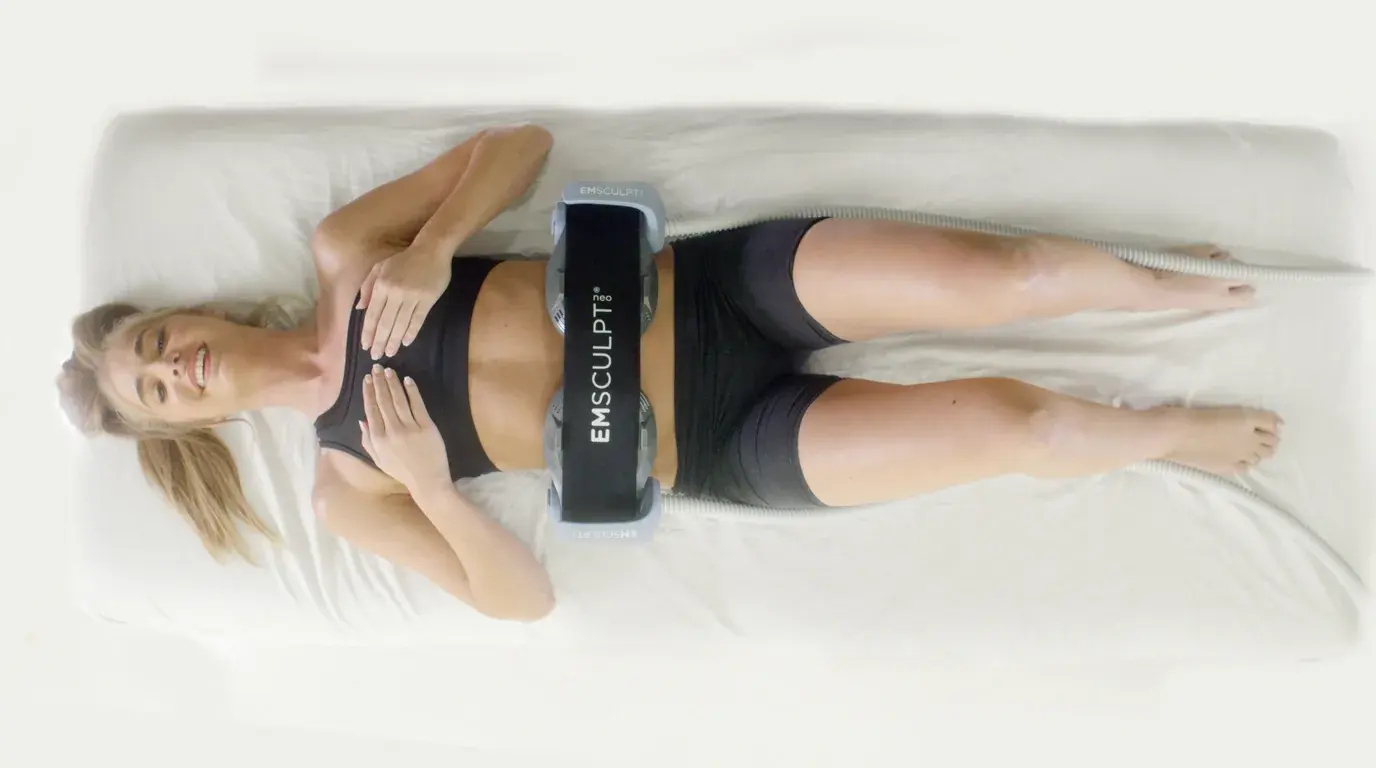
For those who already have healthy habits but feel “stuck,” body optimization tools such as EMSCULPT NEO can help build muscle and reduce fat in targeted areas while you keep working on the basics. These are never stand-alone fixes. They are tools that sit on top of a clear medical and lifestyle plan.
How to body recomposition as a female without burning out
To body recomposition as a female without burning out, you need a plan that respects your hormones, time and recovery. More is not always better. Smarter is better, especially when you are already carrying a full plate at work and at home.
Dr. Sarah often helps women in Sarasota adjust these key areas:
- Training volume: Shorter, focused strength sessions instead of trying to do everything every day
- Protein: Practical ways to hit targets with real food plus any supplements that truly help
- Cardio: Enough for heart health and stress relief while still leaving room for recovery
- Cycle awareness: For menstruating women, shifting training and nutrition around the cycle when possible
- Stress and sleep: Simple tactics that fit into real life, with fewer “shoulds” that create more stress
In the context of an integrative medicine visit, this might include checking thyroid, sex hormones, cortisol patterns and insulin, then making targeted changes rather than guessing. Body recomposition works better when the internal environment supports what you are trying to do on the outside.
When should you worry about the scale, and when can you relax?
The scale is one tool. The key is knowing when to pay attention and when to zoom out. It becomes more important when:
- Weight is rapidly rising without clear cause
- There are signs of fluid overload or shortness of breath
- There is a known medical condition that needs close monitoring
In many other situations, especially when you are early in a strength and nutrition plan, daily weigh-ins can create more stress than clarity. Watching weekly averages, trends over a month, and pairing the number with non scale victories and lab data often gives a calmer, more accurate picture.
At Lesh Lifestyle, Dr. Sarah does not judge progress by the scale alone. In a health optimization or weight program, she will often look at:
- Waist, hip and other body measurements
- Strength and fitness changes
- Symptom scores for fatigue, mood and sleep
- Blood pressure, blood sugar and lipid trends
This bigger frame lets you relax a little about small week-to-week swings and focus on whether your whole health is moving where you want it to go.
When does it make sense to bring in a physician for weight and body changes?
It makes sense to bring in a physician when your effort does not match your results, or when weight and body changes come with other symptoms that suggest something deeper is going on. If you are doing the basics and still feel stuck, it is time to look under the surface.
Patterns that signal a need for medical input include:
- Sudden weight change without clear lifestyle shifts
- Persistent fatigue, brain fog or low mood
- New belly weight gain in midlife, especially with sleep issues
- Irregular periods or hot flashes with weight changes
- A long history of dieting with little lasting progress
Dr. Sarah brings 12 years of clinical experience, emergency medicine training and advanced menopause and metabolic training to this work. She reads your history, labs, symptoms and goals together, then builds a clear plan that might include medication, hormone support, device-based treatments and lifestyle shifts, instead of leaving you to guess which piece you are missing.
When weight, inches and energy do not match, it does not mean you are failing. It often means the scale is only telling part of the story. If you are ready to understand the whole picture and work with a physician who looks beyond the number, Dr. Sarah is here to help you make sense of it and move forward with a plan that fits your life.
Dr. Sarah Secor-Jones, DO, FACEP, is the founder of Lesh Lifestyle in Sarasota.
Ready to look at the whole picture?
Dr. Sarah Secor-Jones, DO, FACEP personally takes every discovery call. Share what has been going on and hear how she would investigate it.