At Lesh Lifestyle in Sarasota, the regenerative aesthetic line is built around PRF. That choice comes from how these concentrates behave in real tissue and how they support healing over time. Understanding that difference helps you decide whether PRF belongs in the plan you are considering.
This guide breaks down prf vs prp in plain language, then explains how a physician-led practice thinks through that decision.
What is PRP?
PRP, or platelet-rich plasma, is a portion of your own blood that has been spun in a centrifuge to concentrate platelets and some growth factors. It has been used for years in orthopedics, sports medicine, and aesthetics to support healing in tendons, joints, and skin.
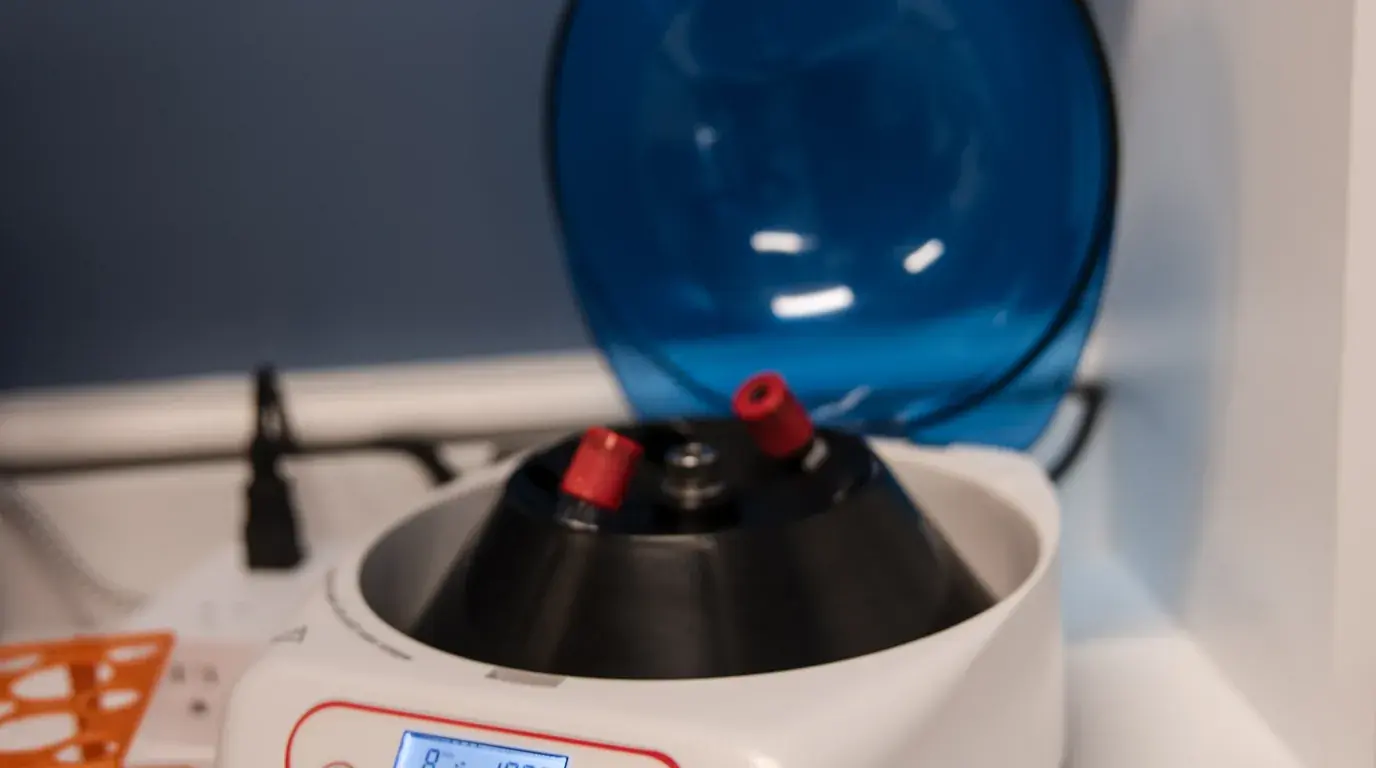
To make PRP, a clinician draws a small tube of blood, places it in a centrifuge, and spins it at relatively high speed. That spin separates the blood into layers. One of those layers holds plasma with a higher-than-normal concentration of platelets. The practitioner withdraws that layer and uses it right away for injections or on the skin.
Because PRP is a liquid with very little structure, it spreads quickly after placement. That can be useful in some settings, like when a surgeon wants growth factors to wash over a large area. In facial aesthetics, that fast release can limit how long the signal stays in one place.
What is PRF?
PRF, or platelet-rich fibrin, is also made from your own blood, but it includes more platelets, more white blood cells, and a natural fibrin scaffold that forms as the sample clots. This fibrin network acts like a loose gel that holds growth factors in place and lets them release slowly over time.
To create PRF, the blood is spun at a lower speed and often without added anticoagulants. Because the spin is gentler, more of the platelets and immune cells stay in the upper layer. As the sample begins to clot, strands of fibrin form. Those strands trap platelets and white cells in a three-dimensional matrix.
Clinically, that means PRF behaves less like water and more like a soft, living sponge. When placed into tissue, it tends to stay where it is put, release signals over a longer window, and interact closely with local cells.
PRF vs PRP: what is the actual difference?
PRF and PRP both come from your own blood, but they differ in how they are prepared, what they contain, and how they act once placed.
PRP is a platelet-rich liquid plasma with fewer white blood cells and minimal fibrin structure. It is produced by spinning blood at higher speeds, often with an anticoagulant, which limits clotting. After injection, PRP disperses rapidly and releases growth factors in a quick burst.
PRF is a platelet-rich fibrin matrix with more platelets, more white blood cells, and a soft fibrin scaffold. It is prepared with a slower spin and minimal additives, which lets a natural clot form. Once placed, PRF holds its shape longer and releases growth factors over hours to days instead of minutes.
In practice, that means the signal from PRF stays active for a longer period in the specific area where it is placed.
Why do some clinics still use PRP instead of PRF?
Many clinics still use PRP because it was the first platelet concentrate widely adopted in aesthetics and it fits the protocols and devices they already own. Switching to PRF requires different collection tubes, different timing, and sometimes retraining on technique.
PRP also works well in several settings, especially when combined with microneedling or used on larger surfaces. It can be easier to handle in certain devices because it flows like a thin liquid.
From the outside, it can look like a brand decision. Inside the treatment room, it is often a question of habit and infrastructure. A clinic built around PRP years ago may not see enough reason to change its workflow if they are satisfied with current results.
At Lesh Lifestyle, Dr. Sarah Secor-Jones, DO, FACEP reviewed those same choices and decided PRF better matched the regenerative goal of rebuilding and restoring tissue, so the entire regenerative aesthetic line is based on PRF.
Is PRF better than PRP?
PRF is not better than PRP in every situation, but it does offer clear advantages for many facial and scalp treatments. The key difference is the slower, steadier release of growth factors from a more concentrated mix of cells.
Because PRF keeps platelets and white blood cells suspended in a fibrin matrix, it can support a longer healing signal. That extended activity may be helpful in areas where you want ongoing collagen stimulation, like fine lines, under-eye hollows, or thinning hair.
PRF also avoids some of the additives used in many PRP systems. For patients who prefer the most natural approach possible within modern medicine, the simple ingredient list of PRF can feel more aligned with their values.
There are still cases where PRP is reasonable. The practical question for any patient is which concentrate best serves the tissue that needs support.
How are PRF and PRP used in real treatments?
In actual procedures, PRP is often dripped or painted over skin after microneedling, injected into joints or tendons, or used in hair-restoration protocols. Because it is thin, it can pass easily through small needles and mix with other injectable products.
PRF can also be used on the surface with microneedling, but it stands out when placed into specific areas as a gel or injectable matrix. Common uses include lip enhancement with PRF, under-eye and facial rejuvenation, scar revision, and hair restoration in the scalp.
At Lesh Lifestyle, PRF is the base material for several services:
- PRF lip filler for subtle volume and improved texture
- PRF facial rejuvenation to support collagen, tone, and fine lines
- Microneedling with PRF to pair controlled micro-injury with a rich healing scaffold
- PRF hair restoration to support follicles in thinning areas
- PRF scar revision and joint injections in select cases
Because PRF holds its shape, Dr. Sarah can place it with more precision in these procedures.
You can read more about these options on the main platelet-rich fibrin (PRF) page and the focused pages for PRF hair restoration and PRF lip filler.
Why does Lesh Lifestyle choose PRF over PRP?
Dr. Sarah comes to regenerative aesthetics from a background in emergency medicine and integrative care. Her focus is on treatments that support the body's own repair processes with as few unnecessary additives as possible. PRF fits that philosophy.
In her practice, PRF offers three clear advantages. The higher concentration of platelets and white cells means more active components at the site where they are needed. The fibrin matrix slows release, which better matches the way tissue actually heals over days and weeks. The simplified preparation aligns with patients who want regenerative support that still feels very natural.
For those reasons, Lesh Lifestyle uses PRF as the foundation of its regenerative aesthetic services. It is a single, clear choice that keeps the protocols consistent and the expectations clear.
When might PRP still be a reasonable option?
There are situations where PRP remains a useful tool, especially in practices or specialties built around it. A sports medicine clinic that has years of experience injecting PRP into tendons may continue to use it with good results. Some surgical teams still prefer PRP for irrigating large surfaces where a fast wash of growth factors is the goal.
If you are seeing a provider who only offers PRP, the important question is how experienced they are with that specific protocol and how clearly they can explain what to expect. A thorough, consistent PRP treatment can be more valuable than a PRF protocol that is rushed or poorly planned.
At Lesh Lifestyle, the choice has been made at the clinic level in favor of PRF. That does not make PRP wrong everywhere. It does mean Dr. Sarah has looked at the options and picked the one she believes serves her patients best in an integrative, regenerative setting.
What should you ask a provider about PRF vs PRP?
If you are comparing prf vs prp at different clinics, a few direct questions can help you cut through the marketing language and get to the clinical reasoning.
Ask what concentrate they use and why they chose it. A clear answer should mention how it is prepared, what is in it, and how it behaves in the tissue they are treating. Vague answers about trends or popularity tell you less than they should.
Ask who actually performs the injections or microneedling, how many of these treatments they do in a typical month, and what kind of changes you can reasonably expect. Ask how many sessions are usually needed and how they will decide when to stop or adjust the plan.
At Lesh Lifestyle, Dr. Sarah handles PRF herself, and every plan starts with an assessment of your overall health, medications, and goals. The platelet concentrate sits inside a broader plan for your health and appearance.
How does PRF fit into whole-person care?
Regenerative aesthetics lives alongside integrative medicine at Lesh Lifestyle. That matters, because the same biology that affects how your skin heals affects how your joints, hormones, weight, and energy behave.
If iron is low, collagen will not build well. If sleep and stress are off, repair signals often miss their mark. If hormones are unbalanced, the skin often shows it. No injection, including PRF, can fully override those underlying patterns.
Dr. Sarah's approach is to read the whole picture first. For some patients, that means starting with integrative medicine or hormone support before or alongside any regenerative aesthetic work. For others, a focused PRF treatment can move in parallel with a broader health optimization program.
When you see PRF vs PRP framed only as a beauty choice, it can feel like a product menu. In a physician-led integrative practice, it becomes one piece of a longer plan to help you feel and look more like yourself.
What does a PRF consultation look like at Lesh Lifestyle?
A PRF-focused visit at Lesh Lifestyle starts the way any visit does here, with a thorough conversation. Dr. Sarah reviews your medical history, medications, prior procedures, and current symptoms. She asks what you notice in the mirror, but also what you feel in your body and in daily life.
If PRF might help, she explains where it fits, what the treatment will involve, and how it interacts with other care you are receiving. Charles Jones, RN, BSN may join the discussion for procedures he performs, such as microneedling or Exion-based treatments.
The goal is a clear plan. That may mean moving forward with PRF lip filler or hair restoration, pairing PRF with microneedling, or starting with something different, like hormone support or body optimization. You leave knowing why each step is being recommended.
If you are weighing PRF vs PRP, the real question is how to best support your own biology in healing and repair. The right approach depends on your tissue, your health, and your goals.
If you are curious about how PRF could fit into a broader plan for your skin, hair, or joints, start with a discovery call at Lesh Lifestyle in Sarasota. You will speak directly with Dr. Sarah, walk through your history, and decide together whether PRF belongs in your next step.
Dr. Sarah Secor-Jones, DO, FACEP, is the founder of Lesh Lifestyle in Sarasota, Florida.
Ready to look at the whole picture?
Dr. Sarah Secor-Jones, DO, FACEP personally takes every discovery call. Share what has been going on and hear how she would investigate it.